Art and culture through the personal
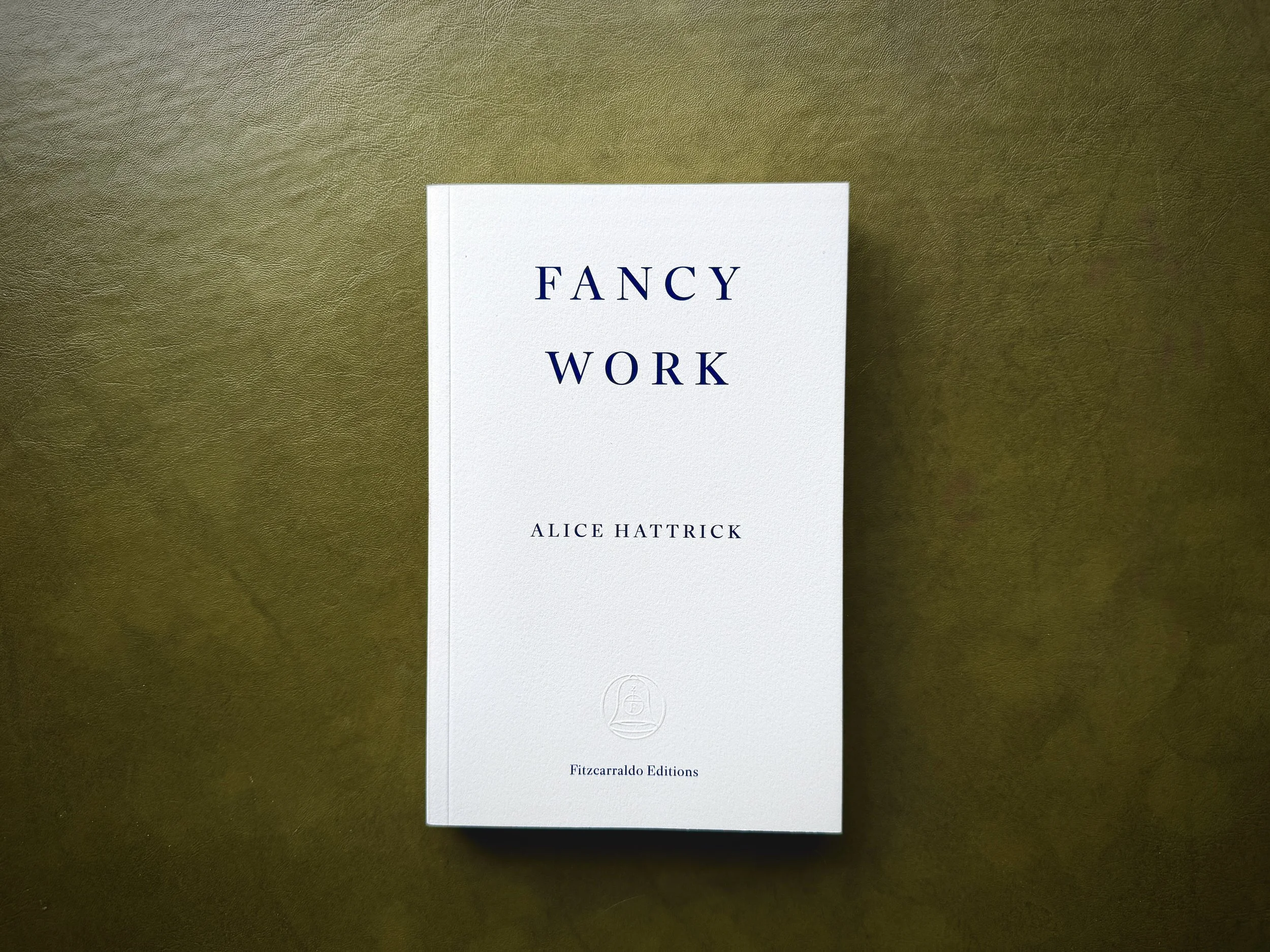
My Nana was a habidasher, my mother was a habidasher’s assistant, and my great aunt was the head seamstress on a shop floor. This is a phrase I have written into my work many times, thinking about how there is a lineage of skill, of thread and knowledge between my maternal family. I will admit now that until I read Alice Hattrick’s Fancy WorkI have been ignorant on how much thread and sewing skills hold a rich history: an archive like no other.
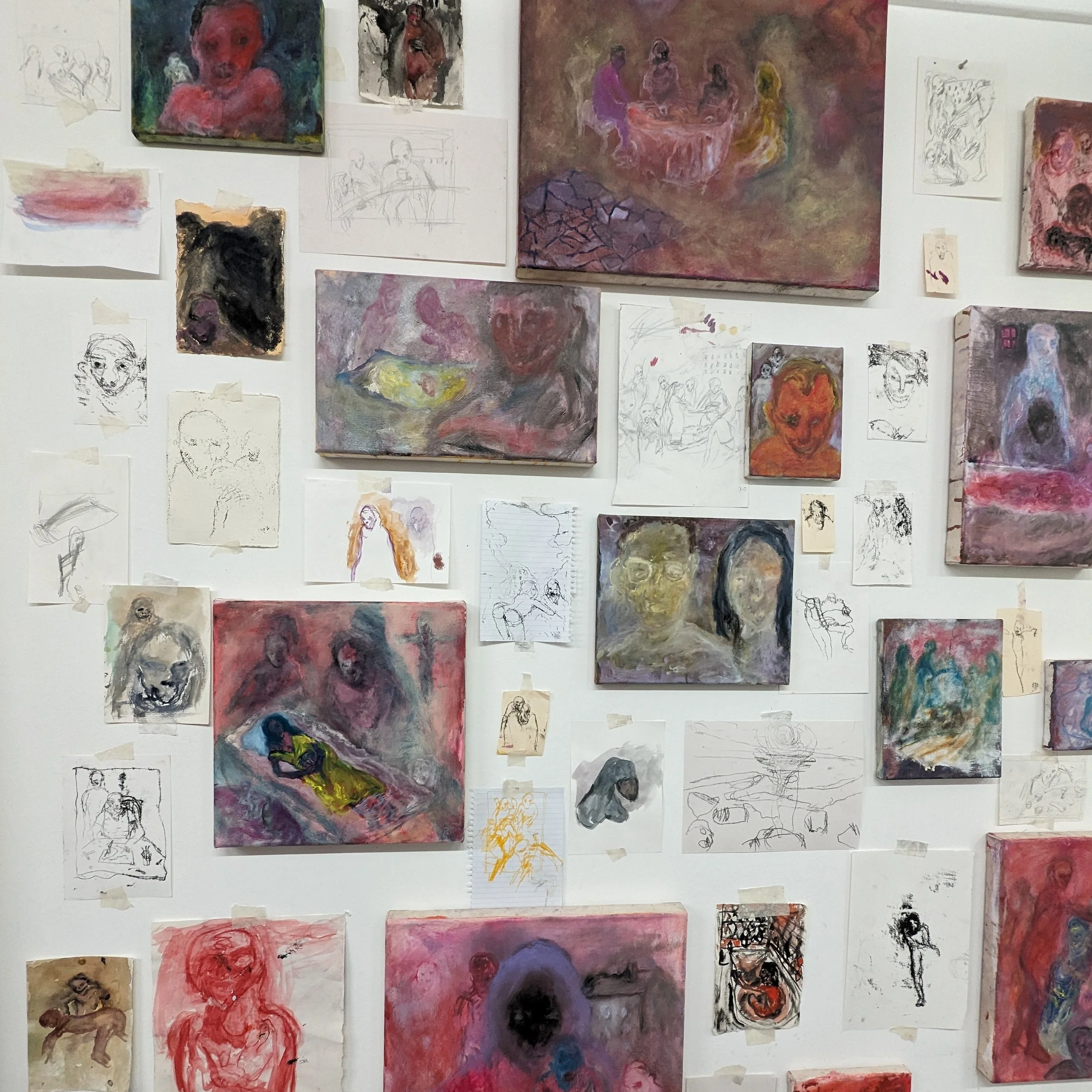
Last November, I visited the Tracey Emin Artist Residency (TEAR) in Margate. The residency programme only accepts painters, and lasts 15 months. But as I walked around the studio spaces, I didn’t just see paintings, but dozens of leaves of paper: drawings, etchings and poems, pinned to the studio walls. One of the residents, Esme, told me that they are encouraged to create both a drawing and a poem at the beginning of each studio day. These can be throwaways: it’s not important to write well, instead it is an exercise in dual expression.
Being alone, when it works, is a gorgeous paradox. What to me seemed singular, or individual, or individuating about aloneness has been wonderfully disturbed by the writing of Donald Woods Winnicott. In a paper originally given at the Extra Scientific Meeting for British Psychoanalysts in 1957, Winnicott explores what might be obvious to some: that we can only truly be alone in the presence of an other.
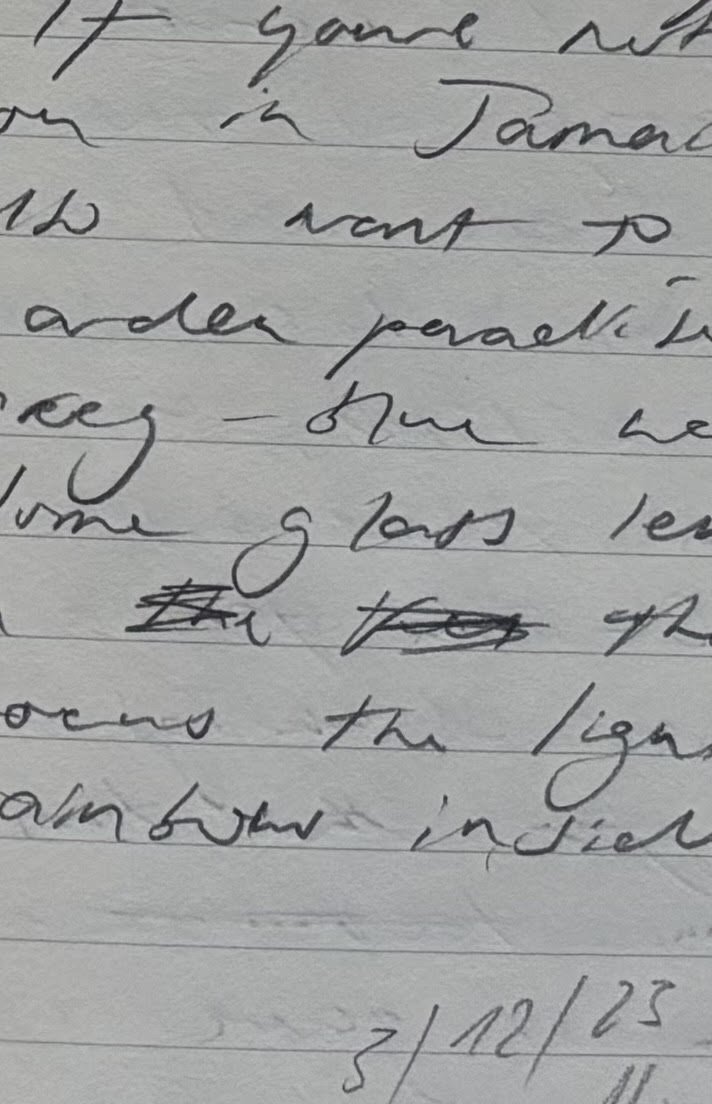
Reading the diary of the one you love would be the only sure way to find out their true feelings. I came in through the door and she was standing in the middle of the room, declaring herself, smiling at me in her cute way, rolling her lower lip like a naughty child, playing caught in the act. ‘I did something bad…I looked in your diary.’
In our months of conversation, artist Tarik Ahlip and I kept returning to the idea of imprisonment. In Sri Lanka, where I write from, Bogambara, a maximum-security prison established in 1876 by the British administration, was closed in 2014, with the explicit aim of developing it into a “Cultural Park”. In February 2026, I visited the prison with the hopes of seeing it in its original reputation of stone walls of colonial architecture—it was also recommended to the public as a site of “sightseeing”.
I wake up to the warmth of Lou’s hand on my face. I open my eyes and see Lou reaching out her hands, smiling. She seems to be in a good mood. I softly plant a kiss on her forehead, then stand up with her strapped to my chest. See the sun set, the day is ending. I look ahead—the mountainous terrain stretches out in front of me, with the open sky sitting behind.
'Okay. Time to head home.'
“My name is Abra. My name is Abra. I had almost forgotten that; the naming of things lost its importance here, with no one to hear them named.” So begins Gaining Ground, the newly reissued novel by Canadian writer Joan Barfoot. Gaining Ground was initially published as Abra in Canada in 1978 and it is being reissued by Faber in the United Kingdom this month. When the book came out it …
On a long walk, I wander into a solo show of the artist Pierette Bloch.
The main room has a long wall text that I mostly skim ... something about the repetition and rhythm within her practice resembling time within music.
Across the room, I see a piece covered in short marks of rich black ink.
HIS PAINS UNKNOWN
Palazzo Dei Congressi
All-Inclusive
Sunset in Arkansas
New Jewelry
A Party Of The People I Love
Outings (with homage to Lisa Robertson)
no-name parkette
stepping
Stoma
Some Varieties of Monsters
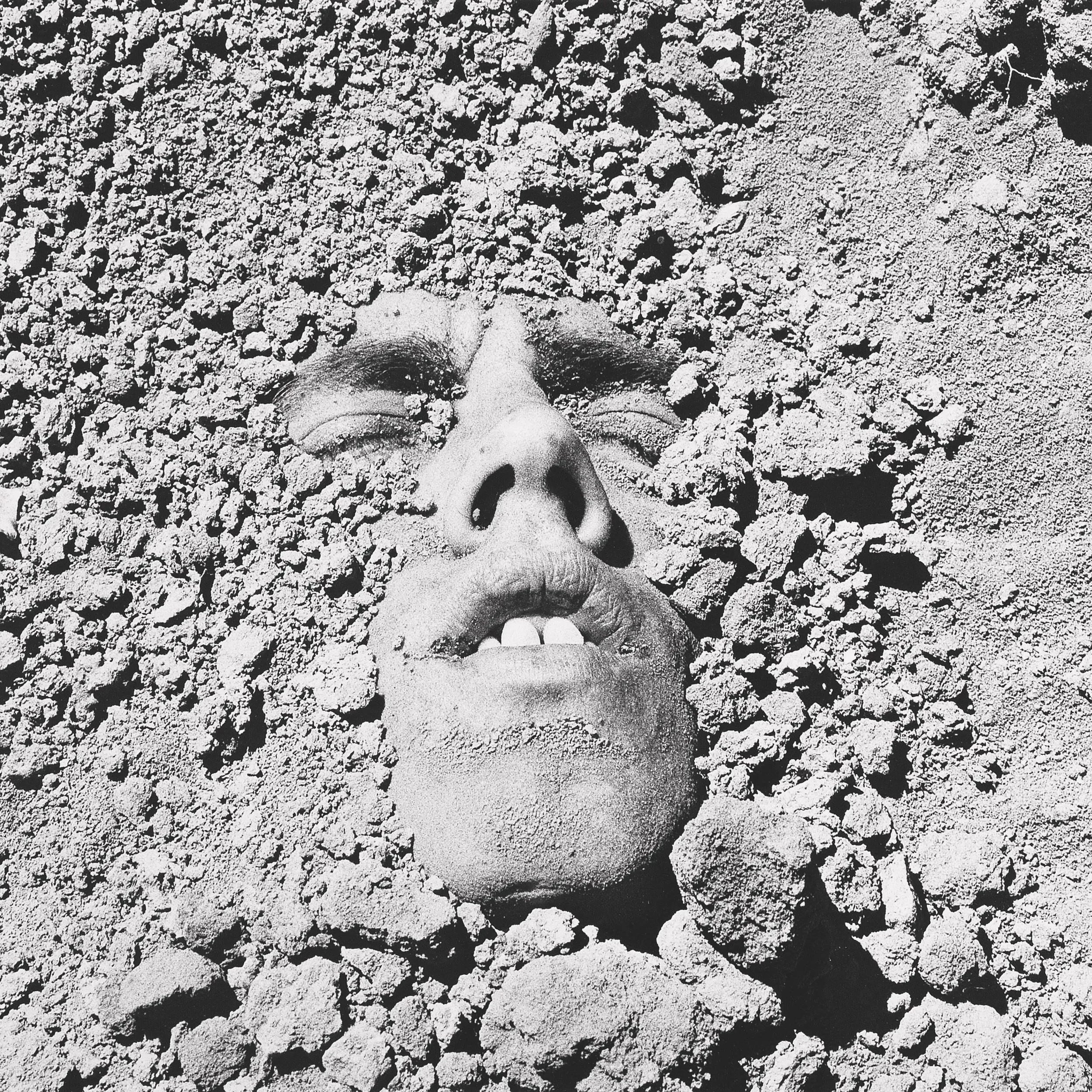
Image: Untitled (Face in Dirt), David Wojnarowicz, 1991
You meet at the Lycée’s decathlon for science in Molyko; he is laughing at something someone just said, and you are ready to leave. But the sun is blazing, and your brother is still roaming, so you duck into the canteen's shade to wait. When your eyes meet again, he is buying water from the woman beside you. You are not sure if he is smiling at you, or if it’s just the last drop of his previous laugh left hanging on his lips. But you need water too, so you walk up to the woman and say ‘hi’.
As Epiphany approaches, the devout converge on the cathedral to honour the stained glass windows in which Christ recycles his Christmas tree.
He sets out just before ten to six, ragged cloud breaking on a horizon of muddy pink, these subtle moments before sunrise the only element depicted with grisaille. He comes to a fork in the road. The more inviting left-hand branch leads to the Christmas tree plantation.
Marcus asked the group to picture their mind as an empty hill. Amy imagined her brain as a pillowy surface. No ridges carved by habitual thought. This morphed into a pockmarked block of cheese. Then to cheese trailed with mould. Then mould topped with her sister’s memoir which their mother referred to as the ‘bible of your sister’s money-making lies’.
It’s not the moment, it’s after the moment and I see myself lying on the bed in orange light with you lying across my lap, your mouth still sucking in your sleep. I’m also asleep even though I have tried, I know I have tried not to, I know how important it is, and I see myself waking, checking my phone and realising it has been at least two hours, no more, many, many more hours of just lying there …
The Backrooms director, Kane Parsons, has cited the video game Portal 2 as his biggest inspiration. The online community that has sprung up around the Backrooms is obsessed with dreaming up new “levels”. Even the anonymous 4chan post that inspired the whole phenomena uses the term “noclip”. It is fitting then that the film, inspired by an urban legend steeped in video game and internet sensibilities, has already been re-released with bonus content.
In the 1990s, the Jenny Holzer truism "It is in your self-interest to find a way to be very tender" became an art world mantra. In the 2010s, Tumblr fed it to the masses and a backlash ensued, labelling its admirers basic. Another decade on and the scales tipped again as millions of us baked bread, banged pots for frontline workers, and embraced Arlo Parks the moment we met her music.
Filmed inside the home of the artists Phillip Maberry and Scott Walker, the music video for The B52’s Love Shack is everything you would want a campy and eccentric New Wave party to be. Bang on the door of Mayberry and Walker’s Shaque D’amour and you'll find cartoonish crayon striped walls that collide with zebra print …
I like a painter with a landscape obsession. I feel at home with a Cezanne, returning over and over to the edge of Mont Sainte-Victoire as he tries to capture the ever-changing colour of its sloping sides. Or an Etel Adan, who did the same to Mount Tamalpais, rendering its hues in both paint and words.